
#TLDR
- A dual compartment refrigerated container is a single commercial walk-in unit split into two insulated rooms, each with its own temperature setpoint, so you can run cooler and freezer storage side by side.
- North Pro Equipment lists dual compartment models on the home product lineup and on the standard C20-30 20 ft Chill Container platform (826 cu ft class, −5°F to 40°F / −21°C to 4°C on the single-zone base model; dual-zone layouts via custom build).
- One dual-zone box is often the budget-friendly 2-in-1 path versus two separate containers: one pad, one crane set, one power drop, one exterior footprint.
- These units are commercial walk-in cold rooms, not 53 ft highway freight reefers. Delivery covers the continental United States and Canadian provinces and territories per service locations.
What Is a Dual Compartment Refrigerated Container?
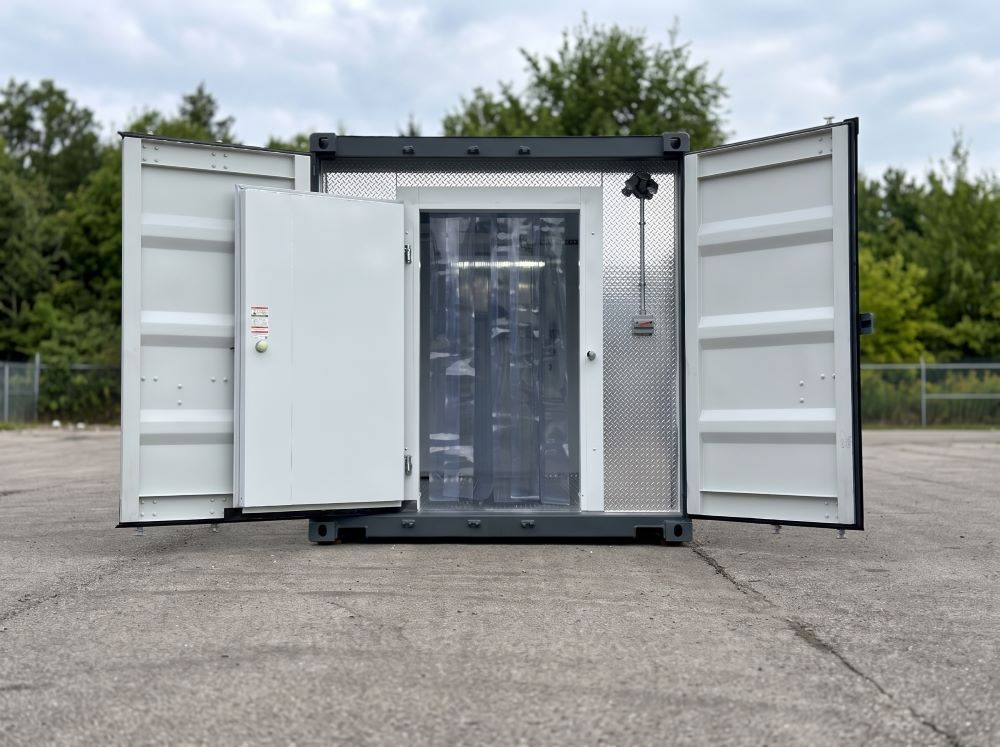
A dual compartment refrigerated container is a factory-built walk-in cold storage box with an interior bulkhead that creates two separate rooms. Each room holds a different product temperature. Typical setups pair a chilled zone for fresh foods, beverages, or produce with a frozen zone for proteins, ice cream, or long-hold inventory.
On the North Pro Equipment site, the lineup calls out a 20 ft dual compartment refrigerated container with two independent temperature zones in one unit for businesses that need simultaneous cooler and freezer storage. The same dual-zone idea also appears on dual compartment trailers and pods when you need a smaller footprint or mobility.
The base Chill Containers platform is the C20-30: 20 ft length, 826 cubic feet of usable volume on the standard single-compartment build, galvanized steel structure, forklift pockets, crane-lift handling, interior lighting, and electric defrost. Power options on the product page include 120/208-240V 30A single-phase and 460V 20A three-phase. Dual compartment layouts are configured through the Custom Build path on that same commercial container platform.

Why Dual Temperature Zones Beat Two Separate Units
Many operators start with two problems at once: chilled inventory and frozen inventory. Buying two full containers solves the temperature split, but it doubles yard space, placement cost, and electrical work. A dual temperature zone container keeps both product classes in one shell.
Core benefits:
- One footprint. One 20 ft box instead of two pads and two crane picks.
- One power plan. You still size electrical service for the refrigeration load, but you avoid a second full site drop and second disconnect path in many layouts.
- Shared structure. One roof, one exterior envelope, one set of doors and seals to maintain at the shell level.
- Simpler inventory flow. Staff walk one cold-storage path instead of shuttling between two distant boxes.
- Clear product separation. Independent setpoints reduce cross-temp risk that shows up when teams try to “split” a single room with plastic and hope.
For food businesses, temperature control is also a compliance topic. Under the FDA FSMA Sanitary Transportation Rule, shippers, loaders, carriers, and receivers must protect foods that need temperature control for safety. Holding chilled and frozen SKUs in dedicated zones inside one dual compartment unit supports cleaner SOPs than mixed-room storage.
Budget-Friendly 2-in-1 Economics
A dual compartment build is not automatically the cheapest line item on a quote. It is often the lower total project cost once you add site work. Compare full project spend, not only equipment price.
- Equipment: One dual-zone shell versus two complete single-zone containers.
- Freight and placement: One delivery and one crane or forklift set versus two.
- Civil and yard: One leveled pad or gravel bed versus two.
- Electrical: One primary feed path in many designs versus two full services.
- Labor: One walk-in workflow for receiving, picking, and sanitation rounds.
- Opportunity cost: Yard square footage freed for parking, staging, or production.
When capital is tight but you still need both cooler and freezer capacity, the 2-in-1 dual compartment path usually beats “buy one now, add another later” if both temperature needs already exist. If only one temperature is required today, a standard single-compartment C20-30 remains the simpler buy. Confirm current pricing and lead time on quote; North Pro Equipment does not publish fixed dual-zone list prices on the product page.
| Decision factor | Dual compartment container | Two single containers |
|---|---|---|
| Yard footprint | One 20 ft class footprint | Two full footprints plus aisle |
| Temperature control | Two independent zones in one shell | Two fully separate systems |
| Placement | One crane/forklift set | Two placements |
| Best when | You need cooler + freezer now on one site | You need max volume per temp or two distant sites |
| Base platform (NPE) | C20-30 dual compartment custom layout | Two C20-30 single-compartment units |
Use Cases for Dual Temperature Zone Containers
Dual compartment units fit operations that store two product classes every day, not once a year.
- Food processors and pack houses: Chilled prep or ingredients in one room; frozen finished goods in the other.
- Grocery, convenience, and commissary overflow: Dairy and produce chilled; ice cream and frozen meals frozen, without expanding the building.
- Catering and institutional kitchens: Event-ready chilled trays beside frozen proteins in one exterior walk-in.
- Beverage and brewery support: Cold keg or can holding next to a frozen ingredient or ice room when space is limited (see also mobile Chill Trailers when you need wheels).
- Meat and protein ops: Fresh cuts chilled; bulk freeze inventory in the second zone.
- Agriculture and harvest buffer: Field-chilled produce plus a frozen hold for value-added packs.
- Pharma and lab support storage: Only when your quality team validates the exact setpoints and monitoring plan; specify ranges on the custom build, do not assume a default dual-zone map.
- Emergency or backup cold storage: One dual unit can cover a failed walk-in cooler and a failed freezer room during repairs.
If the job needs frequent moves between sites, compare a dual compartment container to a dual compartment trailer. Containers suit stationary or semi-permanent yard installs. Trailers suit towable redeployment. Pods suit tight pads and indoor/outdoor compact installs. Dual compartment options are listed across those formats on the North Pro Equipment model pages.
Specs and Options Buyers Should Confirm
Use live product data as the baseline, then lock dual-zone details on the quote.
- Platform length: 20 ft Chill Container (C20-30 class).
- Single-compartment volume reference: 826 cu ft on the standard C20-30 (dual split reduces each side; confirm cubic feet per room on the drawing).
- Temperature capability on the base model: −5°F to 40°F (−21°C to 4°C). Dual builds assign independent setpoints inside that commercial range; request exact cooler/freezer targets in writing.
- Power: 120/208-240V 30A single-phase and 460V 20A three-phase options on the C20-30 page; dual systems may change load. Have an electrician size the feed.
- Defrost: Electric defrost on the standard container platform.
- Handling: Forklift pockets and crane-lift capable for site placement.
- Access: Door count, door side, strip curtains, and interior bulkhead location.
- Monitoring: Thermometers, data loggers, or alarm contacts if your food safety plan requires them.
- Rent vs buy: Short-term needs can go through Chill Out Rentals; long-term capacity usually favors purchase.
Do not treat dual compartment containers as ISO highway reefer boxes for over-the-road freight. North Pro Equipment builds commercial walk-in cooler and freezer containers for on-site cold storage. Towing and highway freight needs belong to a different equipment class.
How to Buy: Simple Checklist
- List every SKU family and the hold temperature each family needs.
- Estimate cubic feet for chilled volume and frozen volume on your peak week.
- Measure the pad, forklift path, and crane access for a 20 ft container.
- Confirm available power (single-phase vs three-phase) at the install point.
- Decide door orientation and which compartment sits closer to receiving.
- Request a dual compartment drawing and quote from North Pro Equipment with both setpoints named.
- Compare that quote to two single C20-30 units plus double site costs.
- Choose buy now, or rent first through Chill Out Rentals if the need is seasonal.
FAQ
What does dual temperature zone mean on a refrigerated container?
It means two insulated compartments inside one container shell, each controlled to its own setpoint, so chilled and frozen product can share one footprint without sharing one air mass.
Is a dual compartment container cheaper than two containers?
Often yes on total project cost, because you pay for one structure, one placement, and one primary site setup. Always compare full quotes, including electrical and pad work.
What size dual compartment container does North Pro Equipment offer?
The commercial container platform highlighted for dual compartment use is the 20 ft C20-30 Chill Container class. Dual layouts are ordered through custom configuration on that platform. Exact room split and cubic feet per side are confirmed on the build drawing.
Can I run cooler in one side and freezer in the other?
Yes. That is the primary dual compartment use case: simultaneous cooler and freezer storage with independent temperature zones. State both target temperatures on the order.
Does North Pro Equipment deliver dual compartment containers in the US and Canada?
Yes. Manufacturer-direct delivery covers the continental United States and Canadian provinces and territories as described on the service locations page. Arctic-insulated inventory is available for northern climates where the site requires it.
Next Step
If you need cooler and freezer capacity on one pad, a dual compartment refrigerated container is the practical 2-in-1 buy. Review the C20-30 20 ft refrigerated container, compare dual-zone custom options on the custom build page, or call +1 (877) 246-2828 with your two target temperatures and site power details.